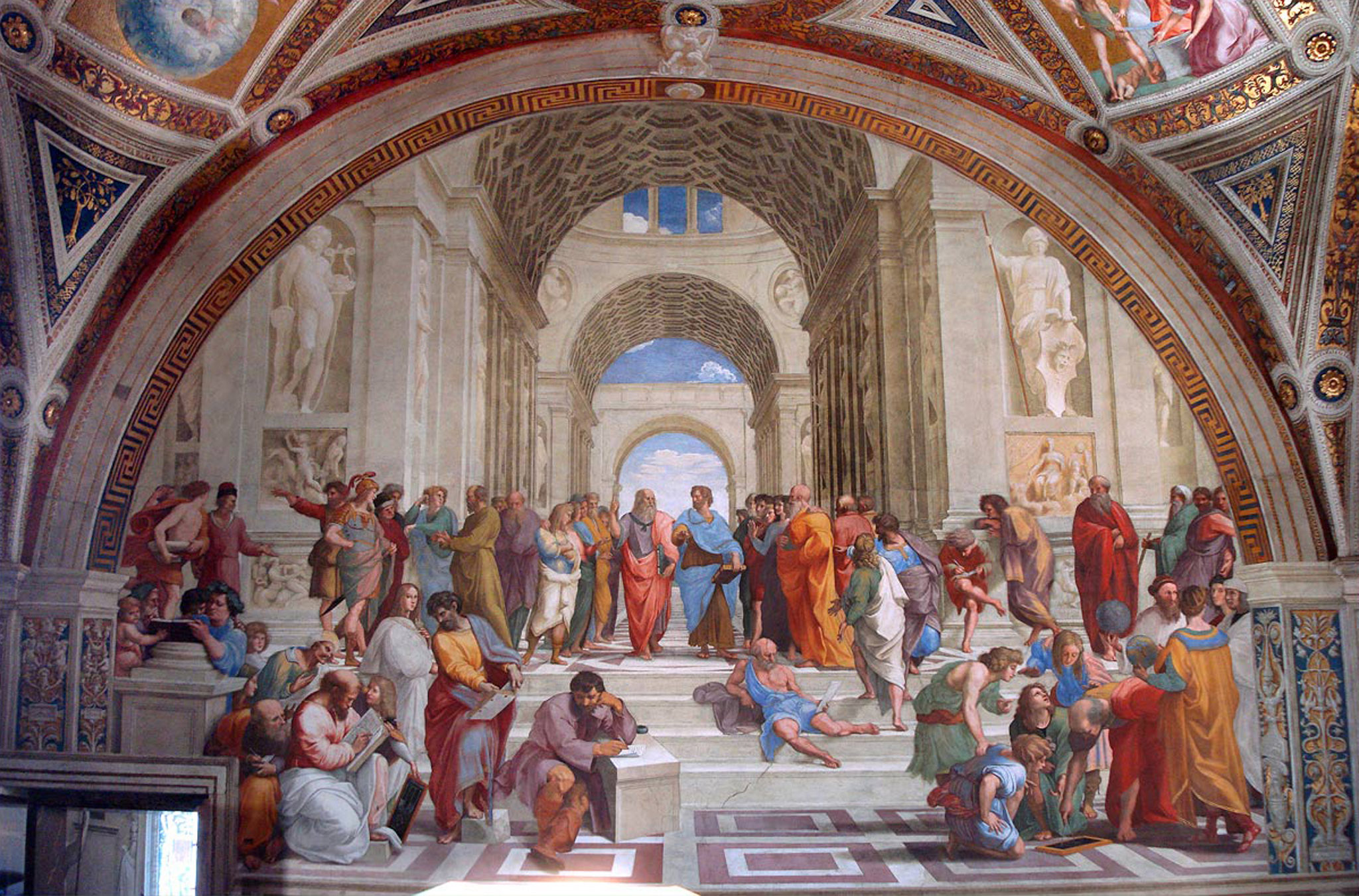
In both art and science, understanding often requires more than simply recording what the eye sees. Complex realities must be distilled, reorganized, and sometimes imaginatively reconstructed to make their underlying relationships visible. In this issue of Art & Neuroscience, we explore how selection, composition, and synthesis allow artists and scientists to transform many disparate elements into one coherent vision—and how departing from literal reality brings us closer to understanding its deeper truth.
Scientific Illustration
The hippocampus is a brain region essential for learning and memory. It comprises several subregions, with different types of neurons forming an elaborate network. To illustrate the organization of this intricate circuit presents an extraordinary challenge: a literal depiction of every neuron and their connections would be overwhelmingly complex and incomprehensible.
Santiago Ramón y Cajal, the great Spanish neuroanatomist widely considered to be the founder of modern neuroscience, addressed this challenge through his remarkable scientific drawings. Rather than attempting to reproduce every anatomical detail, Cajal strategically depicted a few representative neurons and their connections to highlight the fundamental organization of the hippocampal circuit. This schematic drawing is not “realistic”: if one takes a section from a real mouse brain, one would never observe such a sparsely labeled circuit containing exactly these neurons. Nevertheless, it captures the gist of this network’s organization by collating and rendering its components in an artistic manner, thus transforming a bewildering array of cells into an intelligible circuit diagram.
Modern imaging technologies provide increasingly detailed views of neurons and their connections. Yet the underlying challenge remains: how can we extract meaningful organizational principles from the immense complexity of the brain? As Cajal’s drawings demonstrate, scientific understanding depends not only on what we observe, but also on how we choose to represent it.
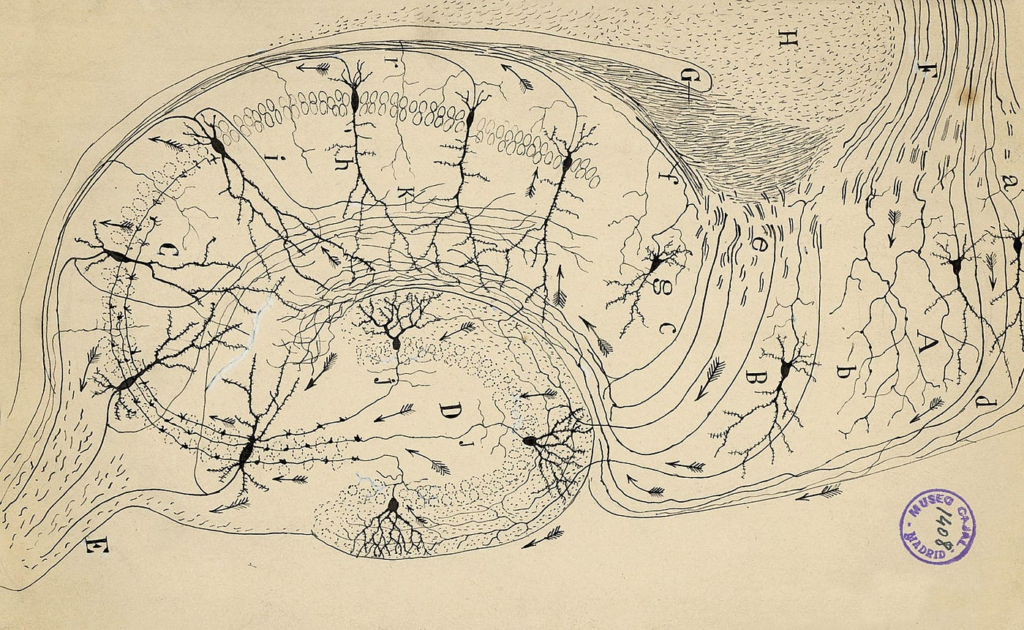
Sketch of the structure and connections of cornu Ammonis
Santiago Ramón y Cajal. Textura del sistema nervioso del hombre y de los vertebrados. Madrid: Nicolás Moya, 1899–1904.
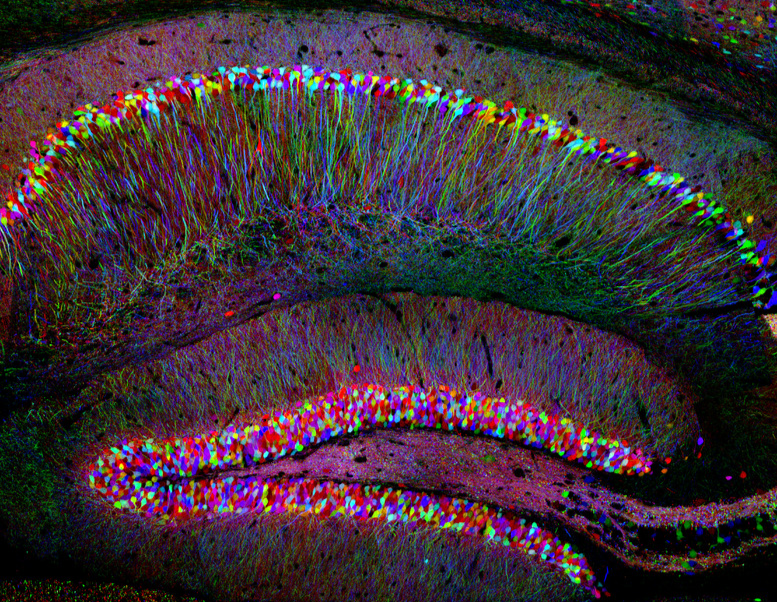
Individual neurons in the hippocampus are labeled with distinct colors in a Brainbow mouse, the product of ingenious genetic engineering in the labs of Dr. Jeff Lichtman and Dr. Joshua Sanes at Harvard University. Image courtesy of Dr. Tamily Weissman-Unni.
Artwork
Artists have the freedom to deliberately depart from reality in their works. This artistic license is one of art’s most powerful functions; it allows the creation of artworks that are not merely representational, but evoke emotion, deliver a message, or embody the values of their time. One strategy used is to piece together fragments of reality – people, places, and objects separated by time and space – to express ideas that transcend reality.
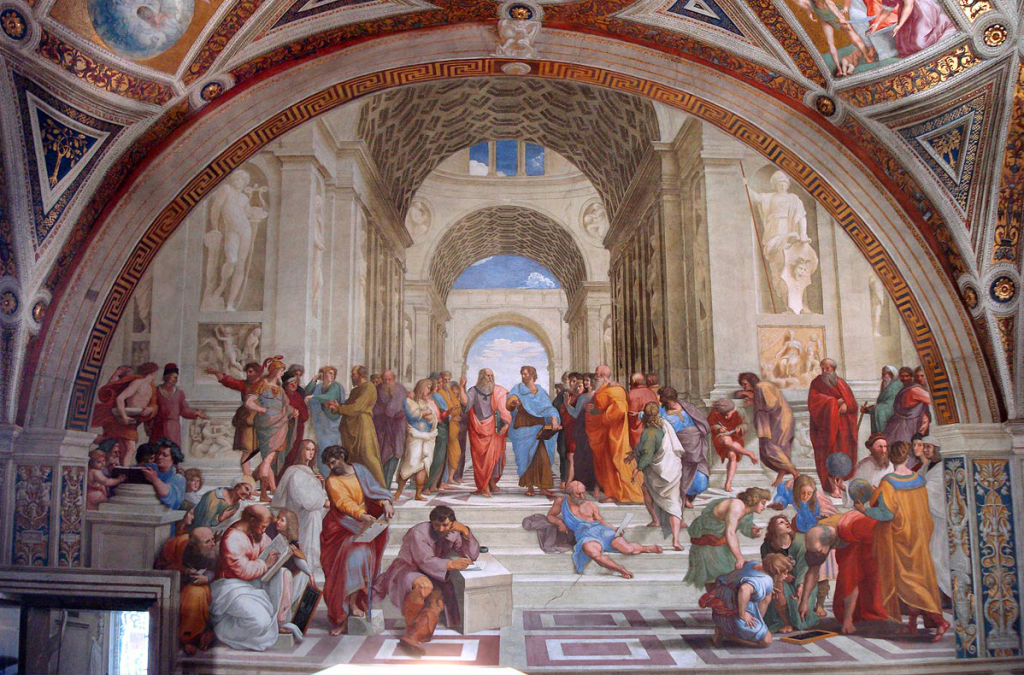
The School of Athens, Raphael, 1509-11, fresco, 5.5 x 7.7m
Raphael’s The School of Athens depicts a gathering of antiquity’s greatest minds. Socrates, Plato, and Aristotle are all present. Yet, many of these intellectual greats could never have met one another in real life. When Socrates died in 399 BC, Aristotle was not to be born for another 15 years. Still, Raphael breaks from historical accuracy and places them together to strengthen his message, that philosophy, or the pursuit of truth and wisdom, is of the utmost importance to human development.
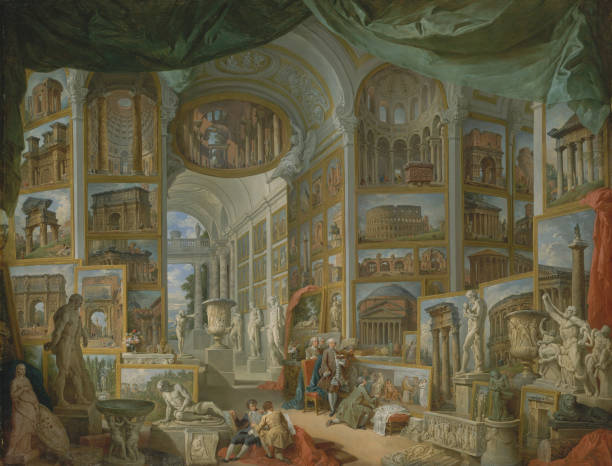
Ancient Rome, Giovanni Paolo Panini, 1757, oil on canvas, 172 x 230 cm
Panini’s Ancient Rome portraits a massive collection of artworks highlighting the architecture and sculpture of Ancient Rome. The buildings and statues depicted in the painting were scattered across Rome and Italy, but Panini artfully depicts them together to emphasize the magnificence and beauty of Ancient Rome, which is grander than any one site could represent.